Coade’s Business Books
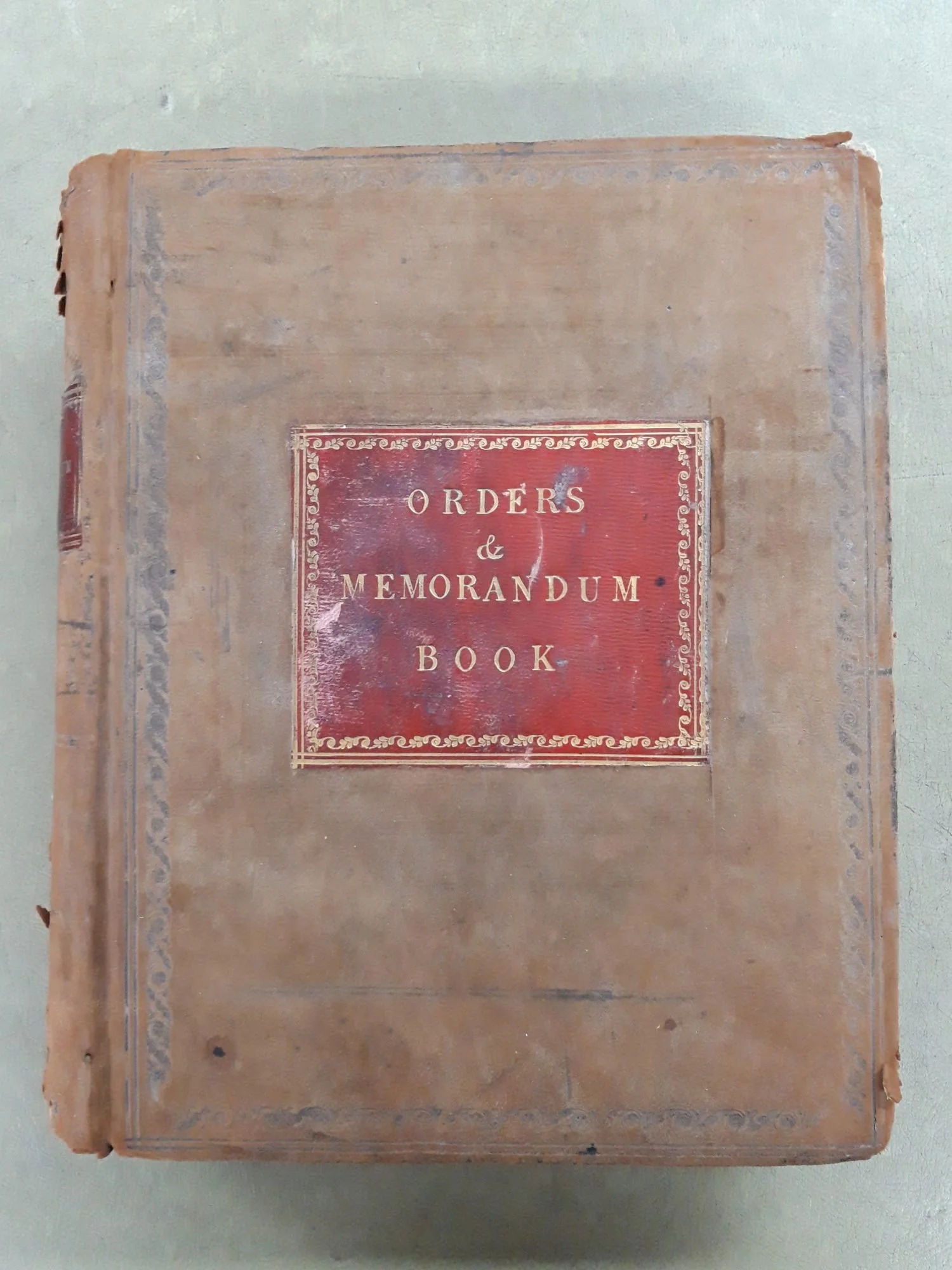
The National Archives hold three business books of the Coade company, covering 1813–1821. They are simply astonishing, providing a fascinating window into the day-to-day workings of the manufactory. They were carefully written by John Sealy, then William Croggon – the manager Coade hired after her cousin’s death. A team of anonymous amanuenses fill the books, some with distinctly feminine hands. The day book shows daily transactions and the balancing of accounts. The order book offers summaries and calculations for orders, and the letter book holds copies of all outgoing correspondence, indexed.
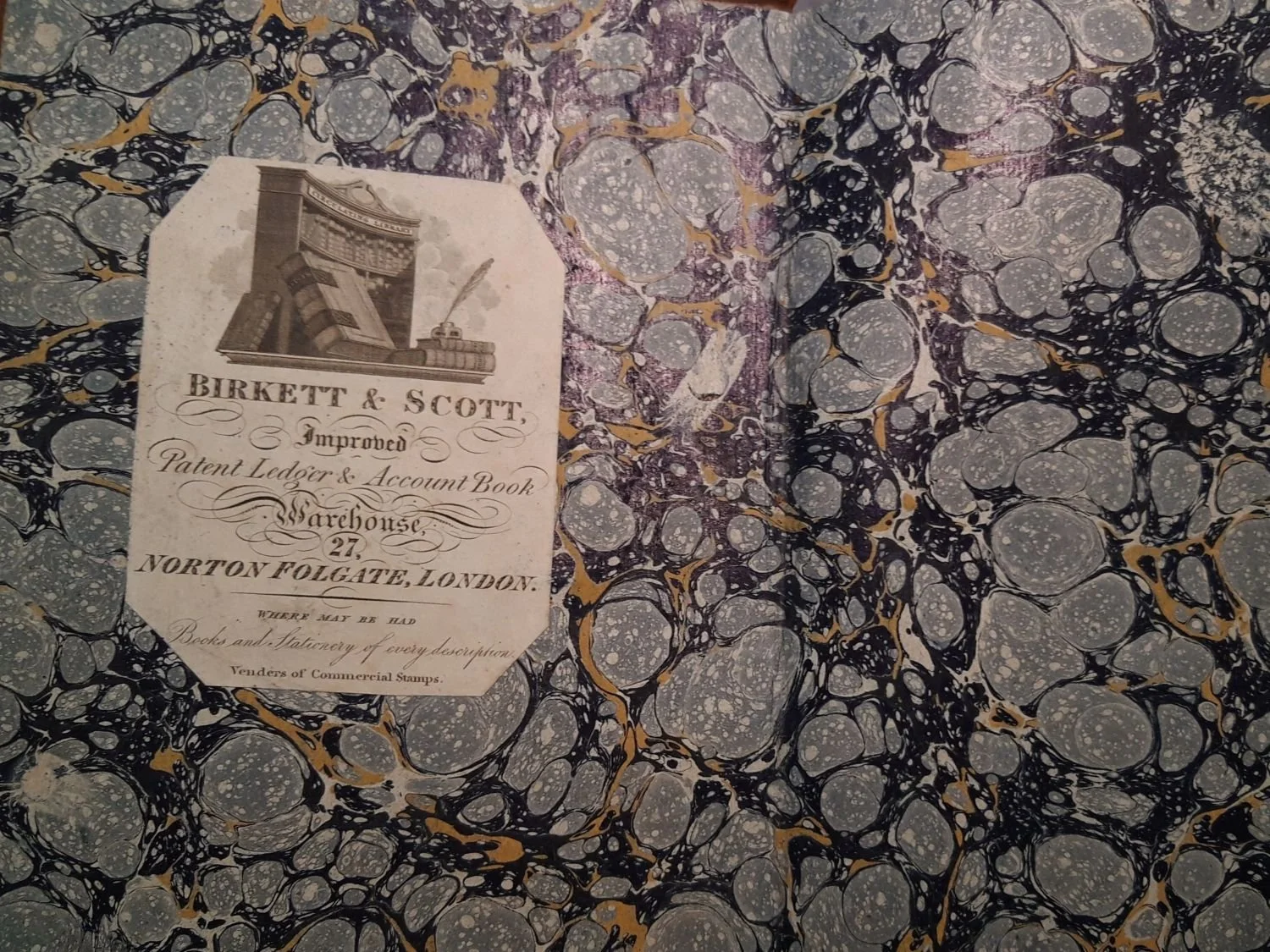
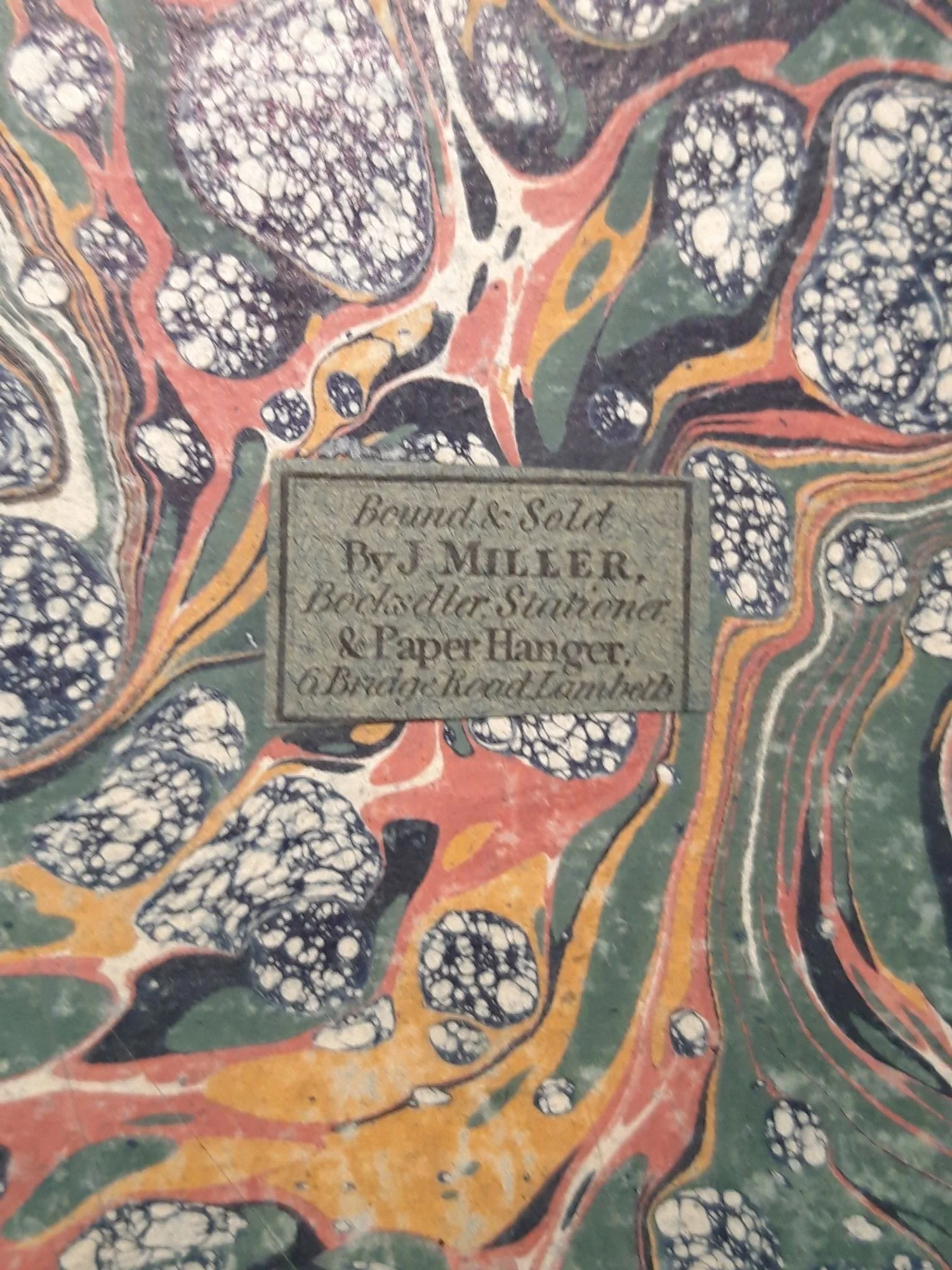
As objects, they are attractive and evocative, bound in soft leather or hard vellum. Marbled endpapers retain their original labels from the stationer’s. Little sketches of pediments and columns illustrate instructions. There are balance sheets, staff wages, delivery instructions – every facet of the business is listed or described. Coach fares, board and lodgings for Mr Dubbin. Shipping, lighterage, cash for wharfage. A hay shipment was not liked by the horses. There are pleas for payment, and a request that the scaffolding be ready for the installation.
That the books exist at all is a wonder. Croggon was not left the business when Coade died. To purchase the company, he brought a case in Chancery over the amount to pay for it. The books were transferred to the Public Record Office, and there they remained. All other record books for the company – before and after these – have been lost.
Bligh would join his wife under the urn with its eternal flame three years later.
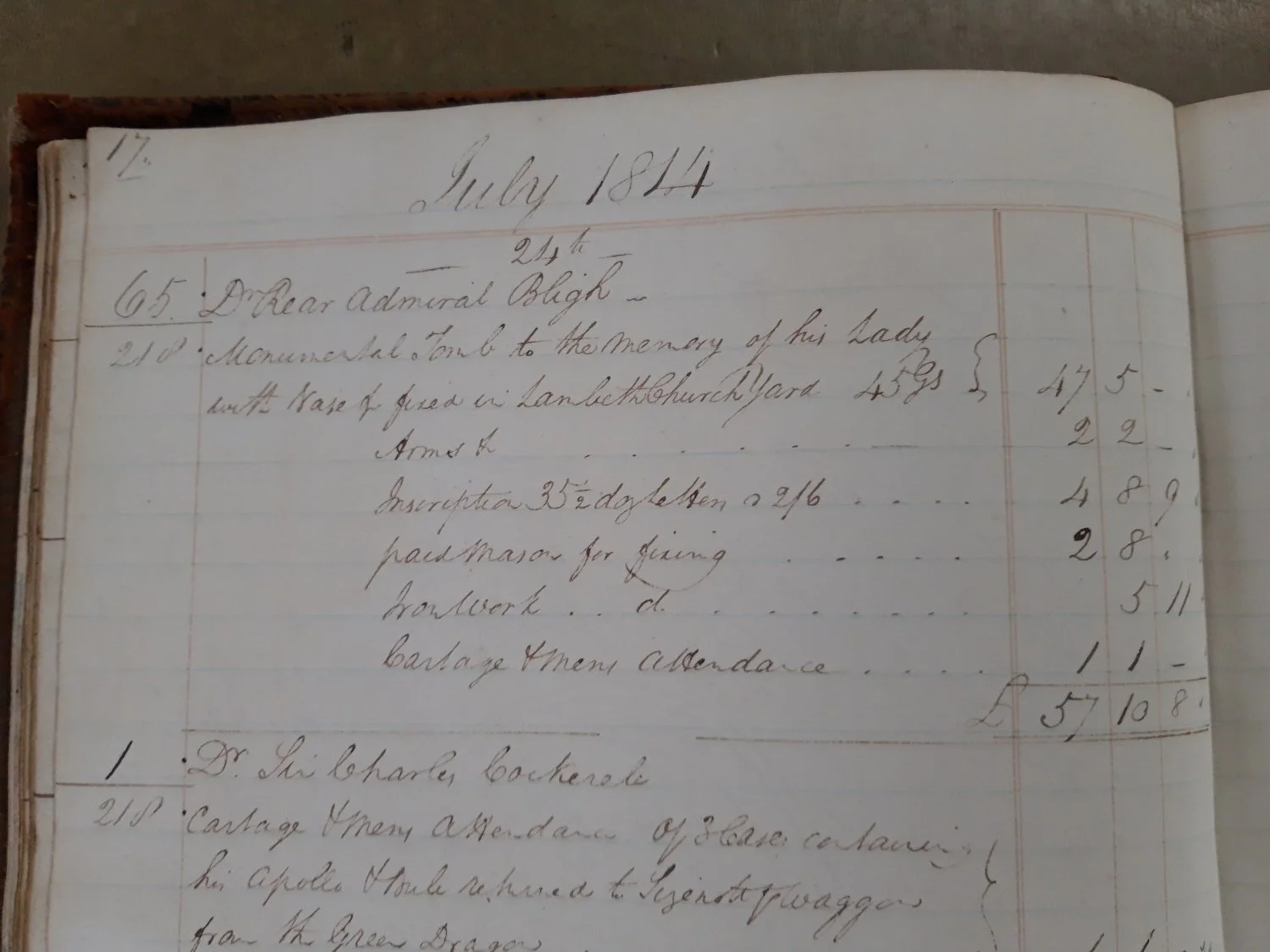
When Admiral Bligh’s wife died he commissioned a Coade stone ‘monumental tomb to the Memory of his Lady… (to be) fixed in Lambeth Churchyard.’ It remains there still, in the centre garden of what is now the Garden Museum.
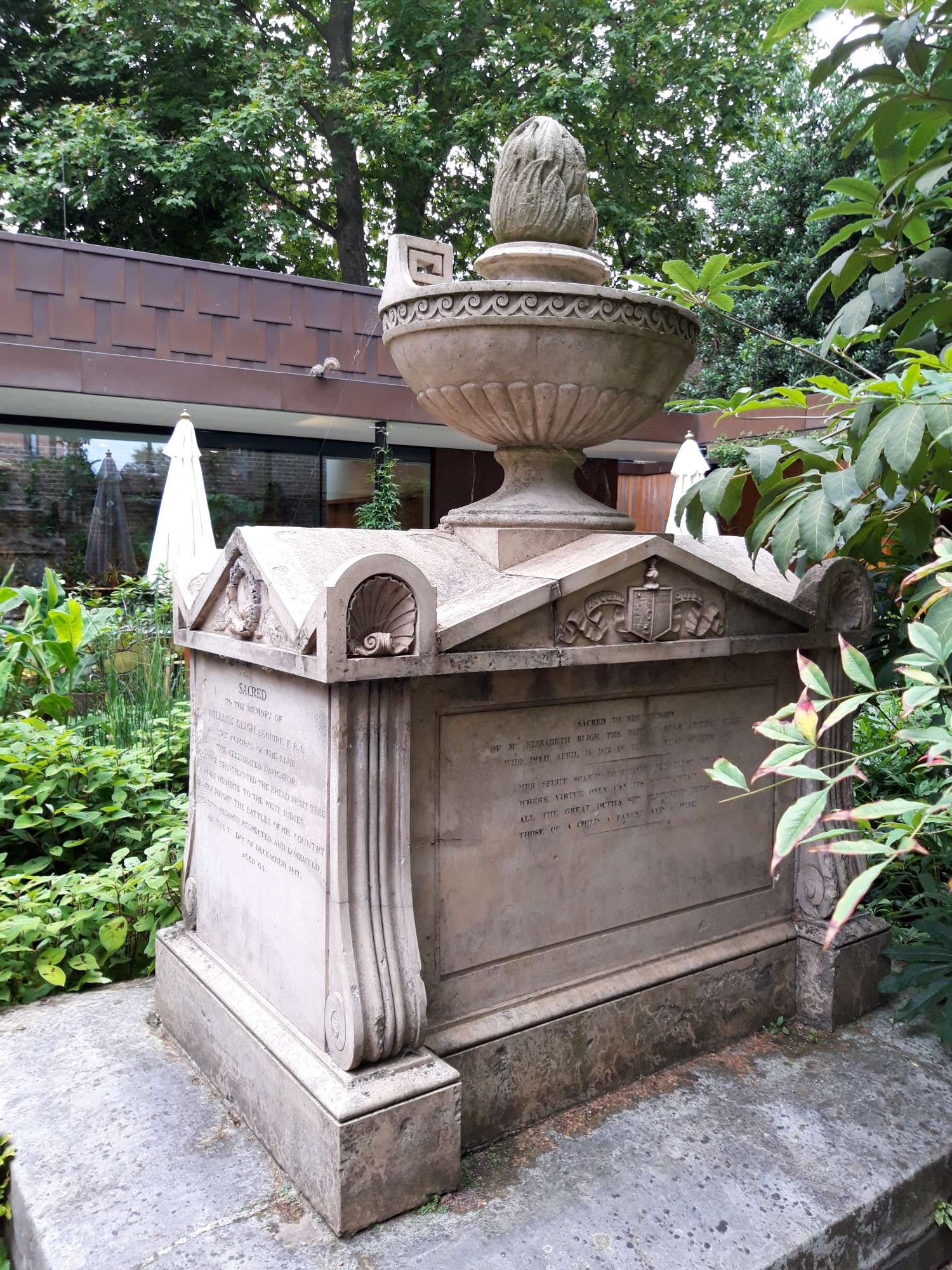
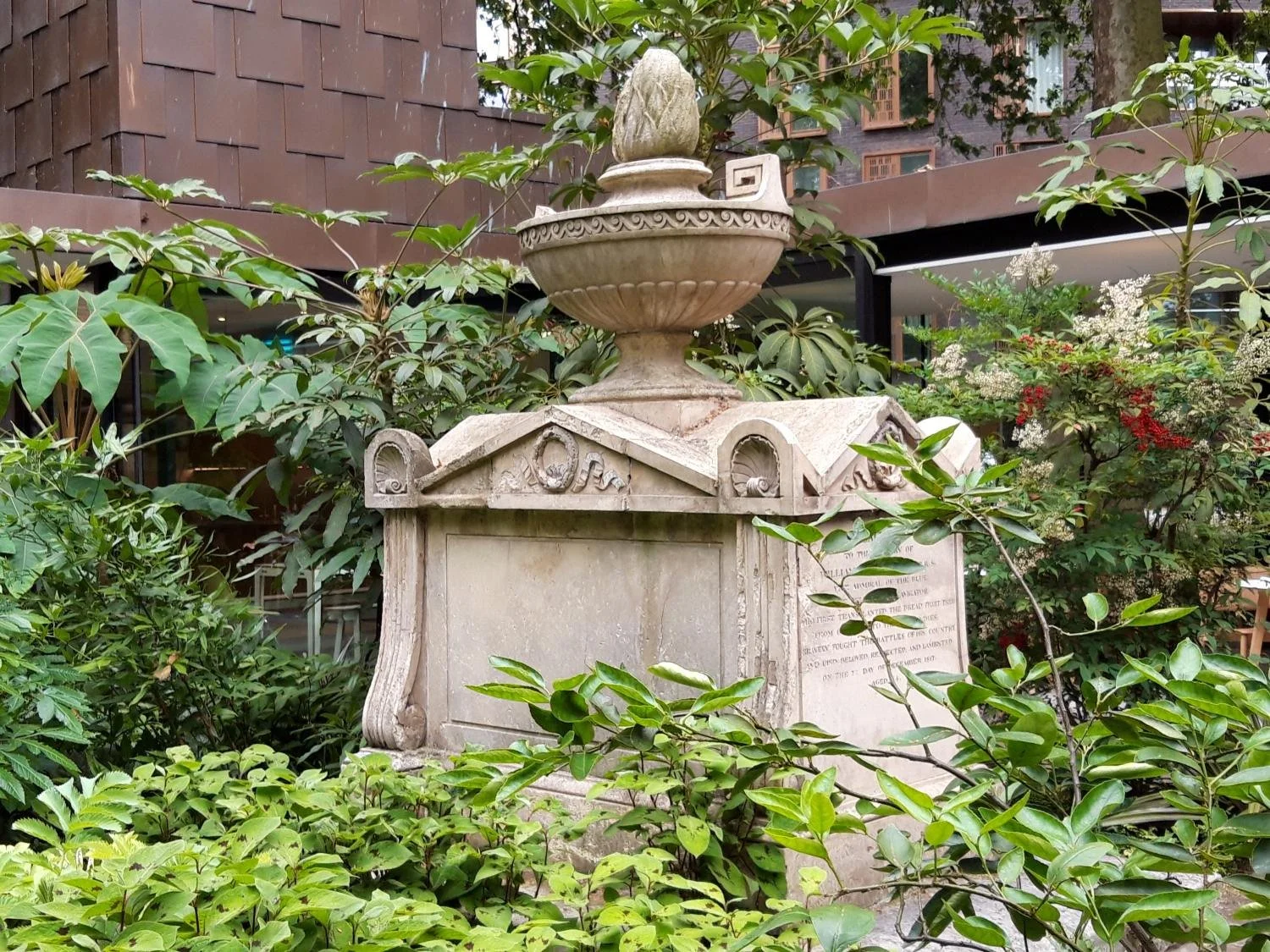
In the order book, we find the total costing of the monument, including wages broken down even into quarter days.
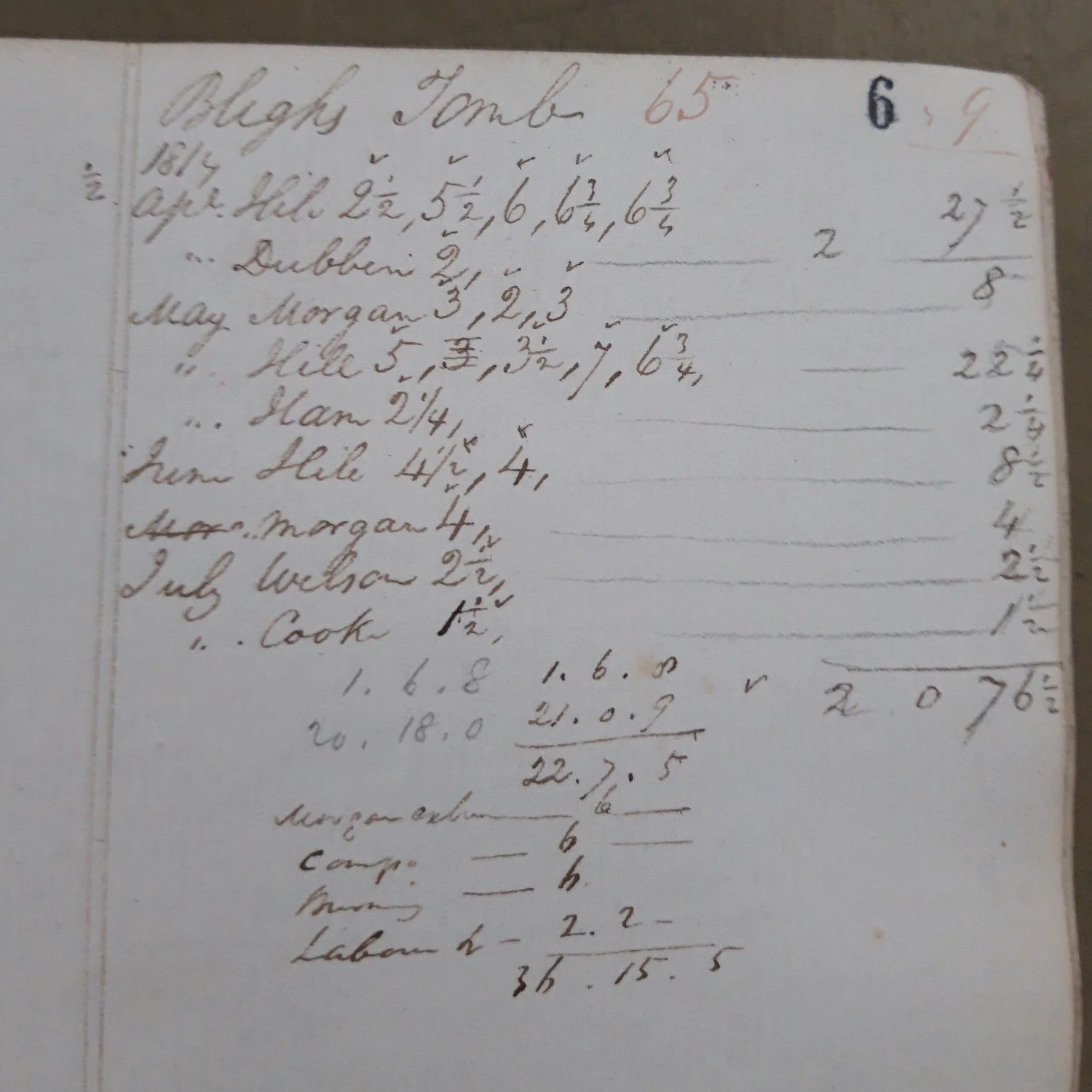
My own photos used with permission of The National Archives, UK; C111/106 Coade business books.