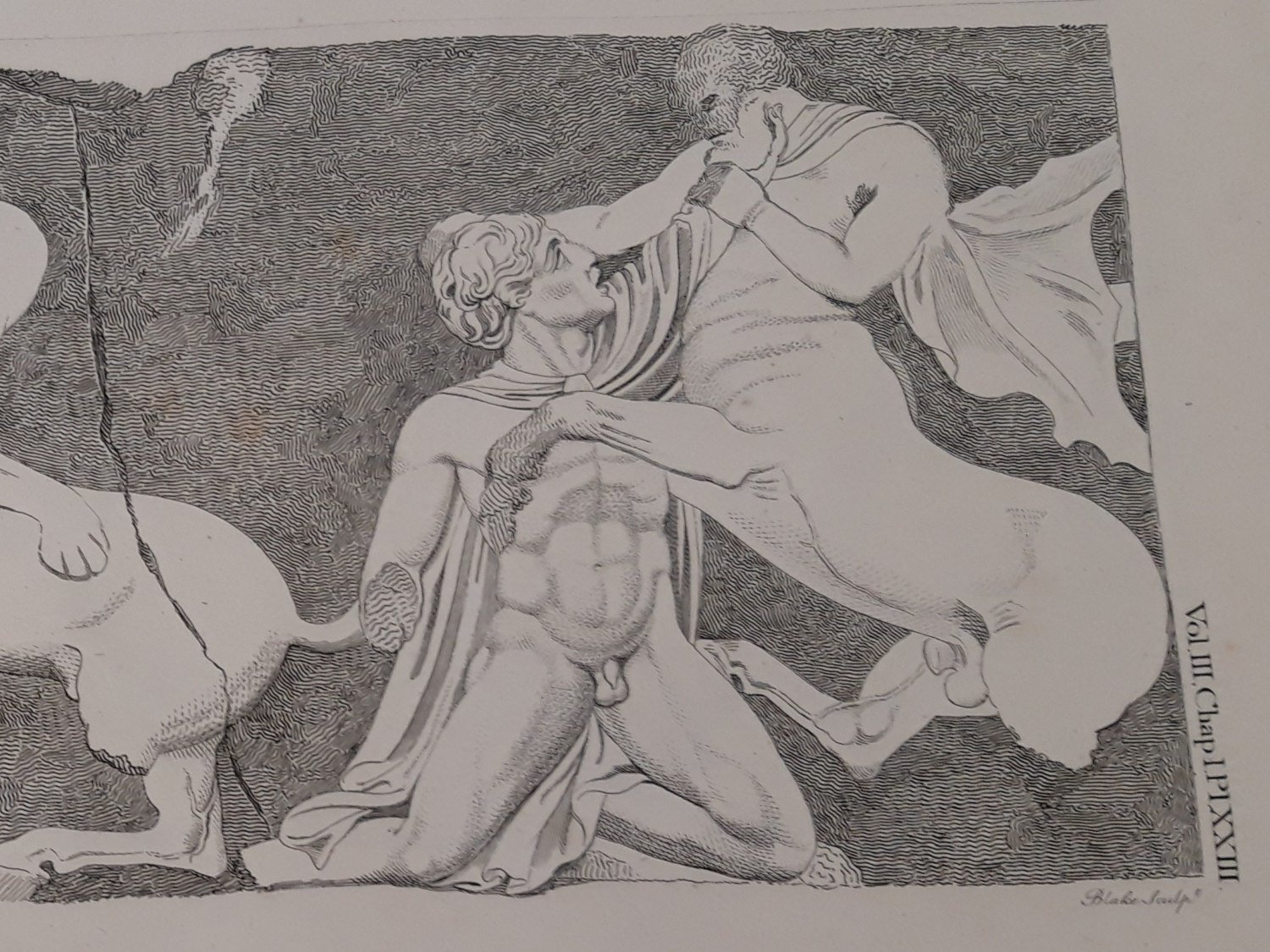
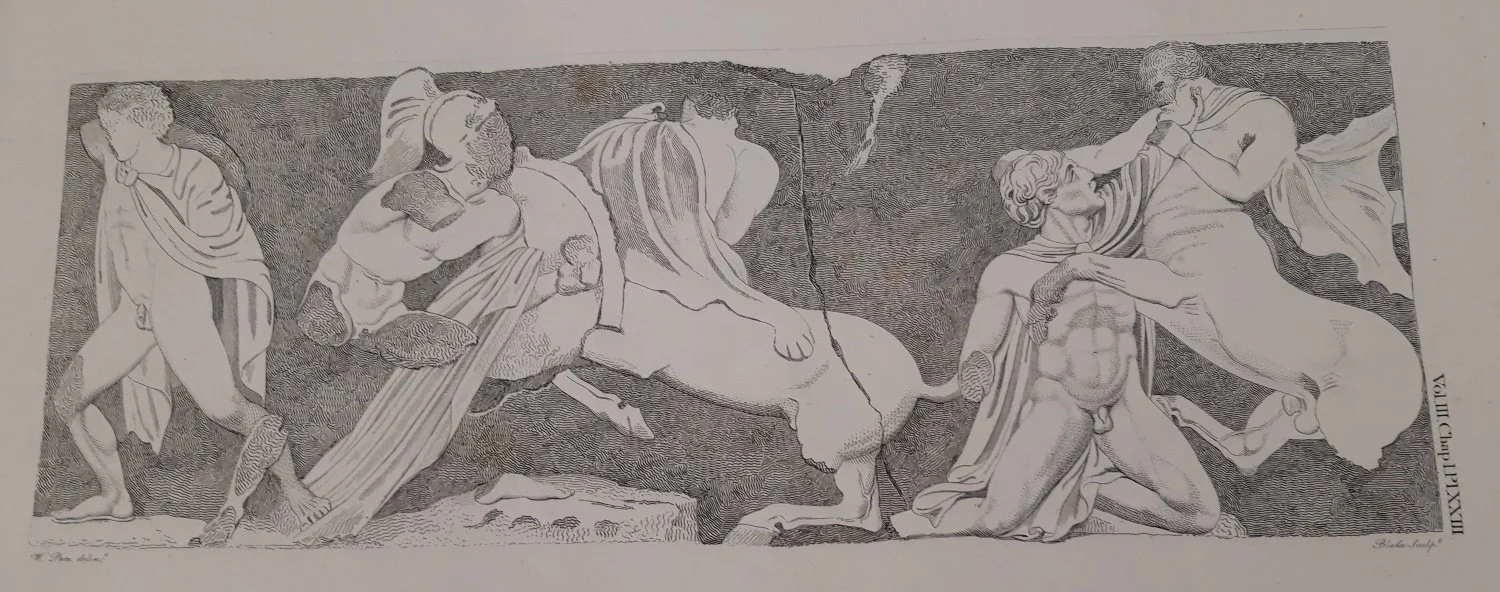
This is not hard evidence, but it does add credence to the River God theory. We know Coade used The Antiquities of Athens as a sort of pattern book for many of the company’s creations, so it is reasonable to think she saw the Blake plates, and may well have been inspired by them to hire this talented engraver to record her River God in print.
Coade’s River God and William Blake
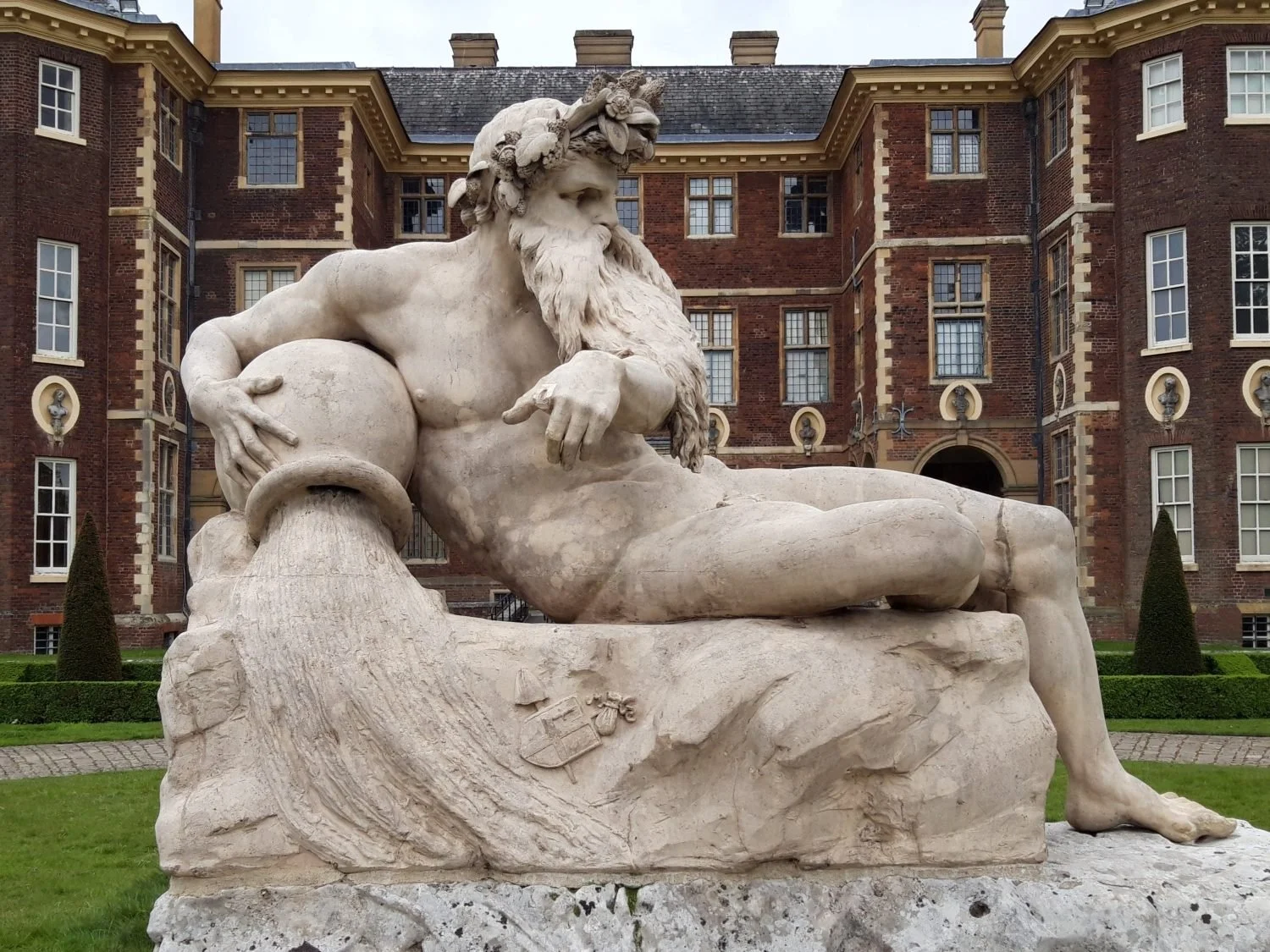
According to her catalogue, Eleanor Coade charged 100 guineas for a statue of a River God. This version currently lounges before Ham House, near the Thames over which he presumably guards.
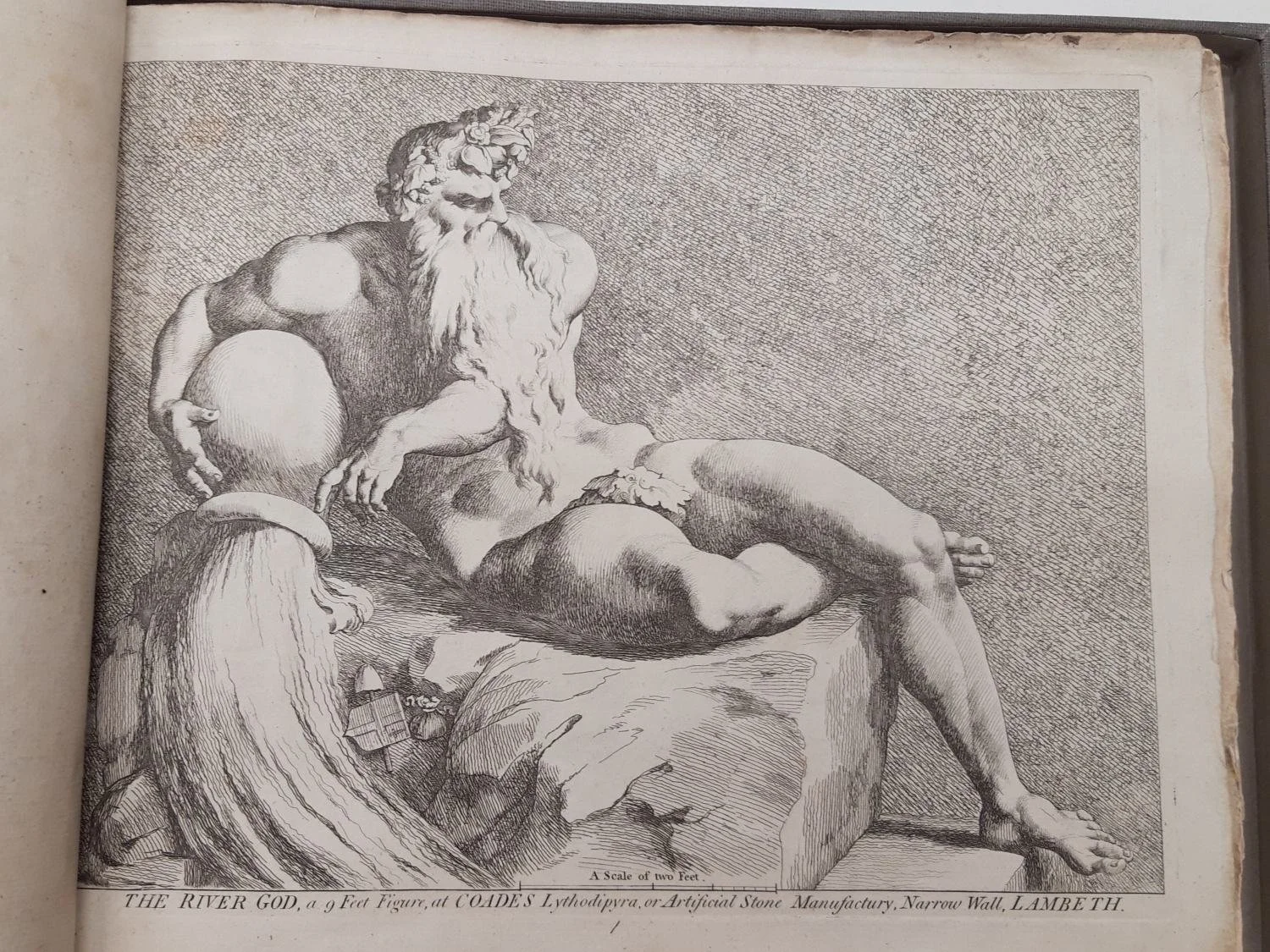
A magnificent engraving was made of the statue. It was used as the frontispiece to the Coade book of etchings, and has traditionally been ascribed to William Blake. Though no documentary evidence exists in support of this theory, it is certainly possible he was the engraver.
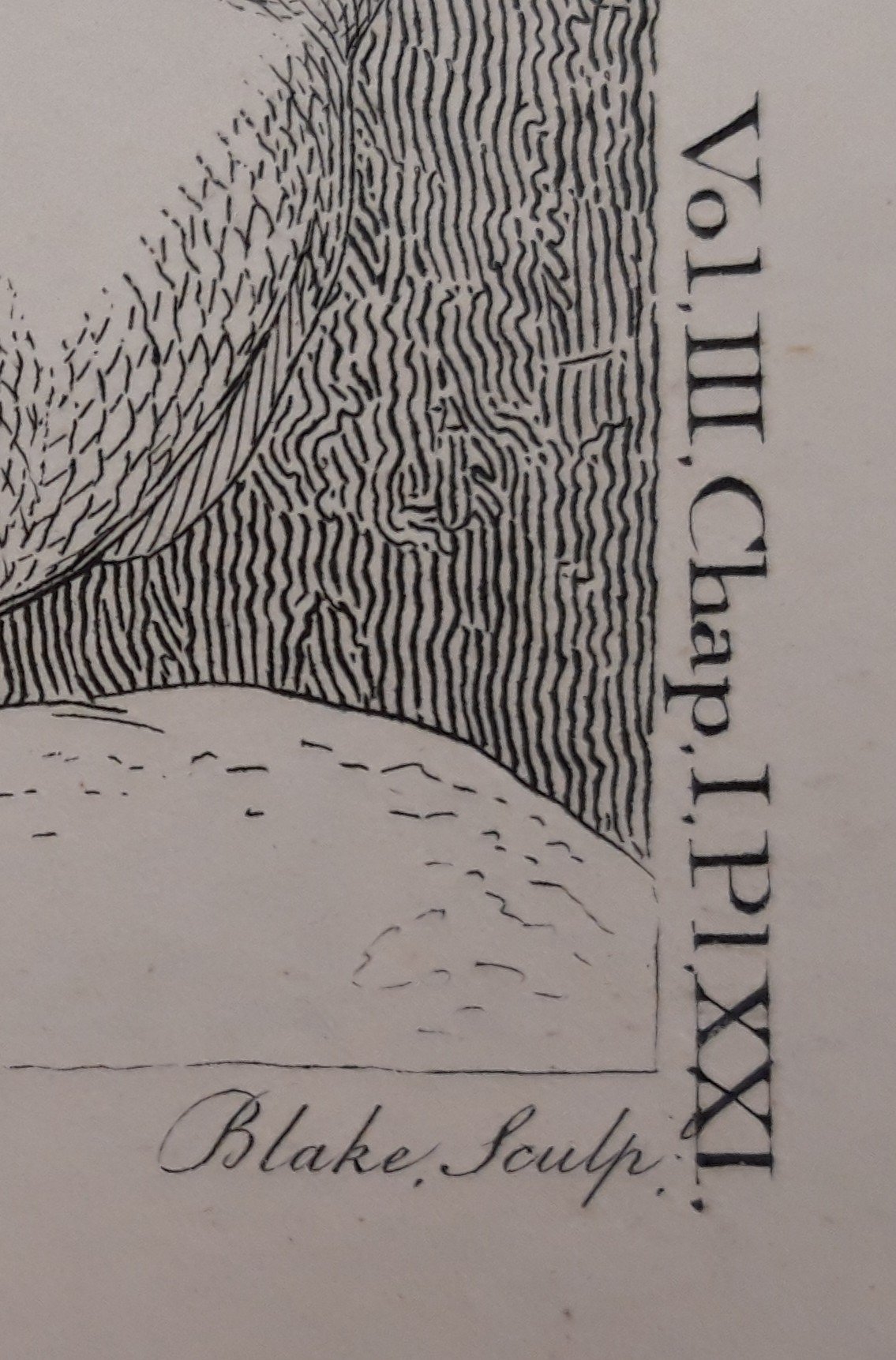
While researching in the British Library one day, I reviewed Stuart and Revett’s The Antiquities of Athens in an 1825 edition, and decided to look at an older version – one that would have been available in Eleanor Coade’s time. Looking up the different copies in the on-line catalogue, one caught my eye: a luxury 4 volume edition owned by George III, including ‘Vol 3 plates 21–24 by Wm Blake.’ Really?!
I quickly requested this edition, and was rewarded with the signature ‘Blake, sculp’ – short for sculpsit, meaning carved or engraved. Checking the background further, a Christies auction catalogue states, ‘(the) four plates in volume three were executed by William Blake, then apprenticed to engraver James Basire.’