Image Credit: RIBA Collections
Eleanor Coade’s Letter
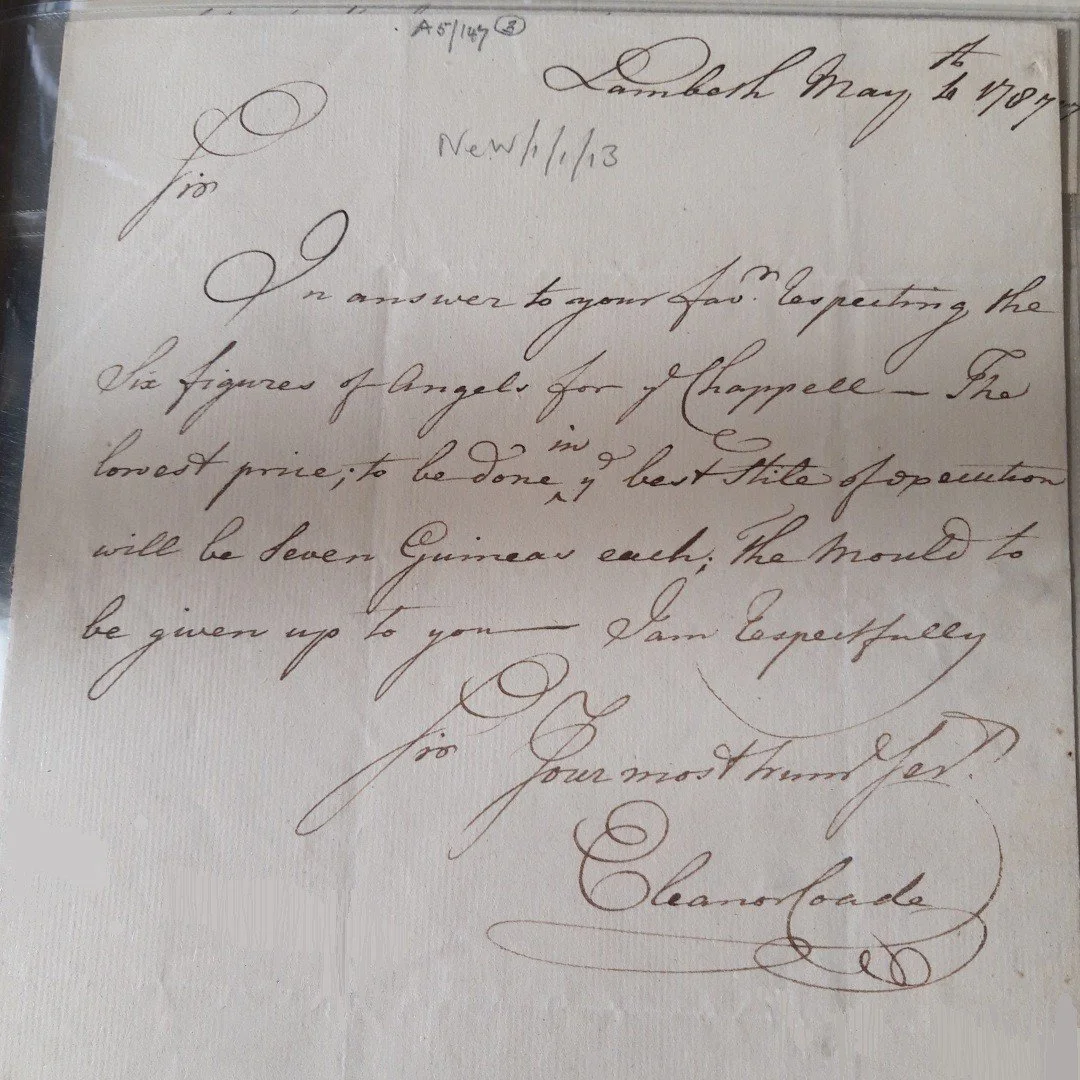
The woman herself! This is Eleanor Coade’s only surviving hand-written letter, held in the RIBA archive – the Royal Institute of British Architects. We have various documents signed by her or transcriptions of letters, but this is the only letter in her own hand.
I visited RIBA’s Architecture Study Rooms on 18 November, 2021 – the 200th anniversary of Coade’s death! It seemed a fitting tribute to the woman, to sit with her correspondence and other working papers, grateful that so much of her stone still exists.
It’s a simple business letter, but her fabulous signature is fairly revealing. In May of 1787 she was just shy of 54 – born 3 June. She had run the manufactory for 18 years and it was a huge success; her swirling autograph exudes confidence.
Lambeth May 4th 1787
Sir
In answer to your (letter)* respecting the six figures of angels for the chappell – the lowest price; to be done in the best stile of execution will be seven guineas each; the mould to be given up to you – I am respectfully
Sir Your most humble (servant)**
Eleanor Coade
* ‘fav.’ is the abbreviation of favour, which meant a received letter.
** abbreviated
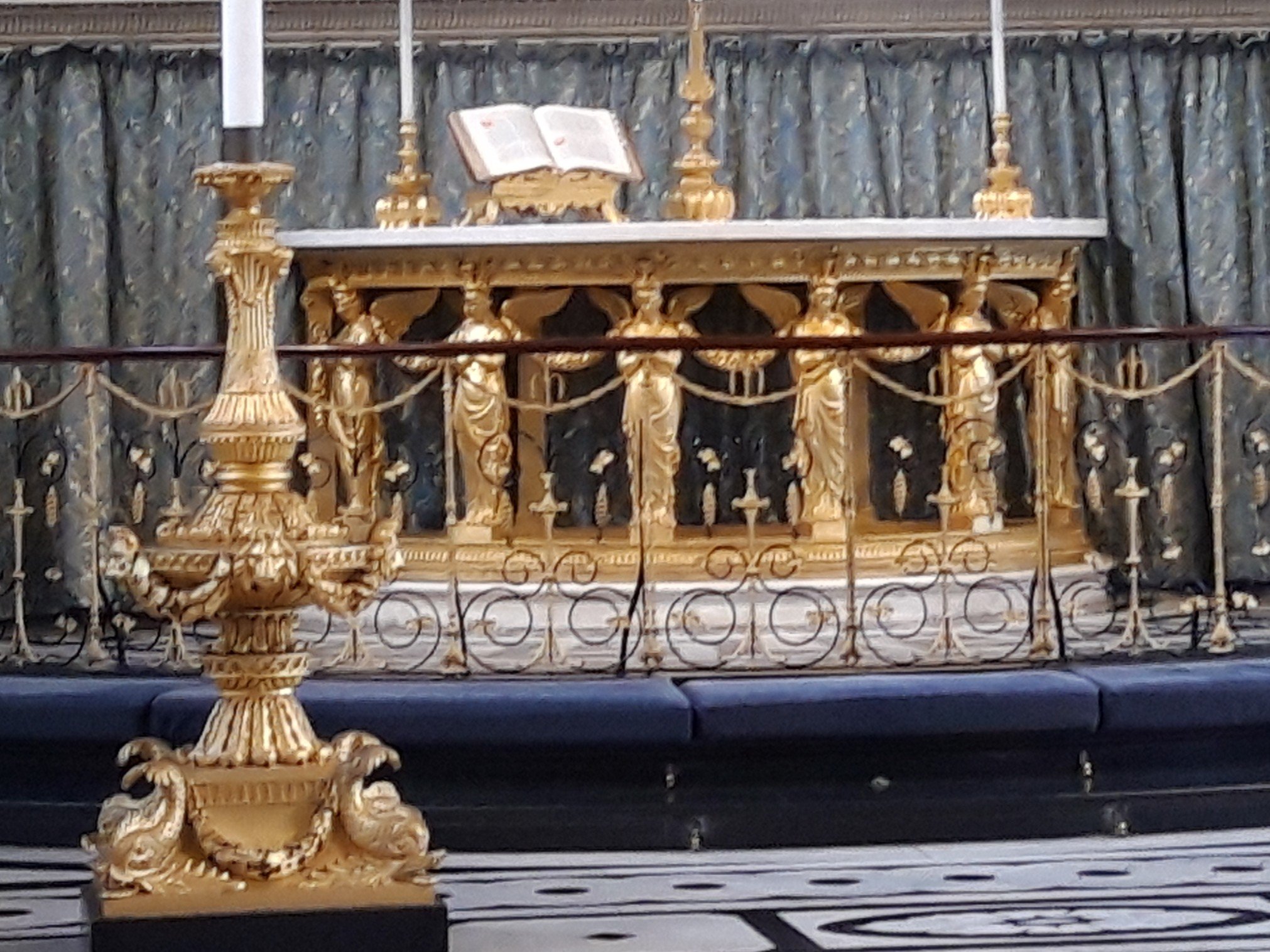
‘The mould to be given up to you’, means the designs would be unique to the chapel. The modelling and mould-making was the most costly part of the process – perhaps that is why these are expensive statues. In the Coade catalogue, published just 3 years before, statues of around the same height are only one guinea.
Originally built in 1751, a fire devasted the chapel of what is now the Old Royal Naval College, Greenwich, in early 1779. James ‘Athenian’ Stuart oversaw the rebuilding project. His Clerk of Works, William Newton, had design and implementation responsibilities as well, and this letter rests with the Newton Papers. It was folded up and sealed in red wax, and addressed only to ‘Mr. Newton, Greenwich’.
Other letters in the collection discuss the hands and dial of the clock, the carving of the pulpit, and a worry that the stairs to the river will cost more than expected. There was timber at Somerset House of an excellent length that should be examined. The journeymen carpenters refused to work all summer; angry contractors complained of feeling cheated.
The seven guineas must have been paid, as the angels still support the altar in the chapel; they are now gilded.
There is much more Coade stone throughout the building: plaques on the walls and on the pulpit (varnished to match the wood), capitals, a coat of arms, and life-sized statues of Virtues in the foyer. Stroll from the chapel to the courtyard of the King William Building to see Coade stone on a monumental scale – the astonishing Nelson Pediment. The visitor centre for the college has a small (but worthy) Coade display.